
Brief Overview: How to get mildew smell out of a rug: Start by finding and eliminating the moisture source, then dry the rug thoroughly. Vacuum away trapped debris and use an appropriate deodorizing or cleaning method to remove the lingering musty odor. Vacuuming, baking soda, and careful cleaning may help with mild odors, while persistent smells may require professional attention.
That damp, earthy odor coming from your rug is hard to ignore. A mildew smell in a rug often develops when moisture gets trapped in the fibers, backing, or padding after a spill, leak, high humidity, or incomplete drying. If that moisture isn’t addressed, the odor can linger and become increasingly difficult to remove.
But a musty-smelling rug doesn’t necessarily mean you need to replace it. Knowing how to get mildew smell out of a rug, you can tackle mild odors with the right cleaning and deodorizing techniques while also recognizing when the problem may require professional rug cleaning. Before treating the smell, it’s important to find out what caused it and make sure the rug is thoroughly dry.
What Causes a Musty Smell in Rugs?
A musty smell usually has one thing in common: moisture. When a rug stays damp for too long, moisture can become trapped deep within its fibers, backing, or padding. Dust, dirt, and other organic particles can then contribute to the unpleasant odor. Common causes of a musty-smelling rug include:
- Spills and stains: Uncleaned moisture can seep deep into the rug.
- High humidity: Excess moisture in the air can make rugs damp.
- Water leaks: Leaks or damp flooring can keep the rug exposed to moisture.
- Improper drying: A rug that stays damp after cleaning may develop a musty odor.
- Poor airflow: Limited ventilation slows drying and traps moisture.
- Damp storage: Humid storage spaces can cause rugs to develop musty smells.
- Mold or mildew: Prolonged moisture can lead to microbial growth and persistent odors.
Finding the source is an important first step. Otherwise, you may remove the odor temporarily only to have it return because the moisture problem is still there.
How to Get Mildew Smell Out of a Rug: Step-by-Step
Getting rid of a musty odor isn’t always about using a stronger cleaner. The goal is to remove the conditions causing the smell while cleaning the rug safely. Follow these seven steps to tackle the odor without unnecessarily damaging the fibers.
Step 1: Identify and Fix the Moisture Source
Before treating the odor, determine why the rug became damp. Check for recent spills, plumbing leaks, condensation, damp flooring, or moisture underneath the rug. If the rug sits over a wet pad or floor, cleaning the rug alone won’t solve the problem.
Move the rug away from the moisture source and address the underlying issue before continuing. Otherwise, the musty smell may return even after the rug has been cleaned.
Step 2: Dry the Rug Completely
Proper drying is one of the most important parts of learning how to remove mildew smell from carpet. Place the rug somewhere with good ventilation and allow air to circulate around both sides when possible.
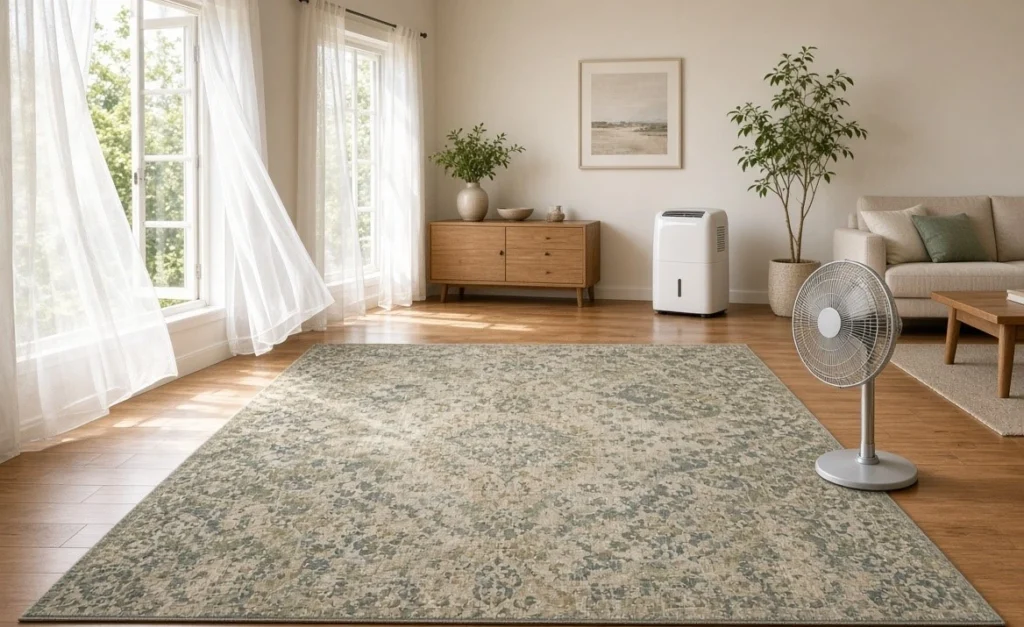
Fans can improve airflow, while a dehumidifier may be useful in a humid room. Don’t roll, fold, or put furniture back on the rug until it is completely dry. Trapped moisture can keep the odor around and create conditions for further microbial growth.
Step 3: Vacuum the Rug Thoroughly
Once the rug is dry, vacuum it thoroughly to remove dust, dirt, hair, and other debris trapped within the fibers. These particles can contribute to unpleasant odors and make the rug harder to freshen.
Vacuum both sides if the rug’s construction allows it, but use care with delicate, antique, or handmade rugs. A gentle vacuuming routine is preferable to aggressive brushing that could damage the fibers.
Step 4: Apply Baking Soda for Mild Odors
For a light musty odor, baking soda for rug odor can be a simple household option. Sprinkle a thin layer over the dry rug and allow it to sit for several hours before vacuuming it thoroughly.
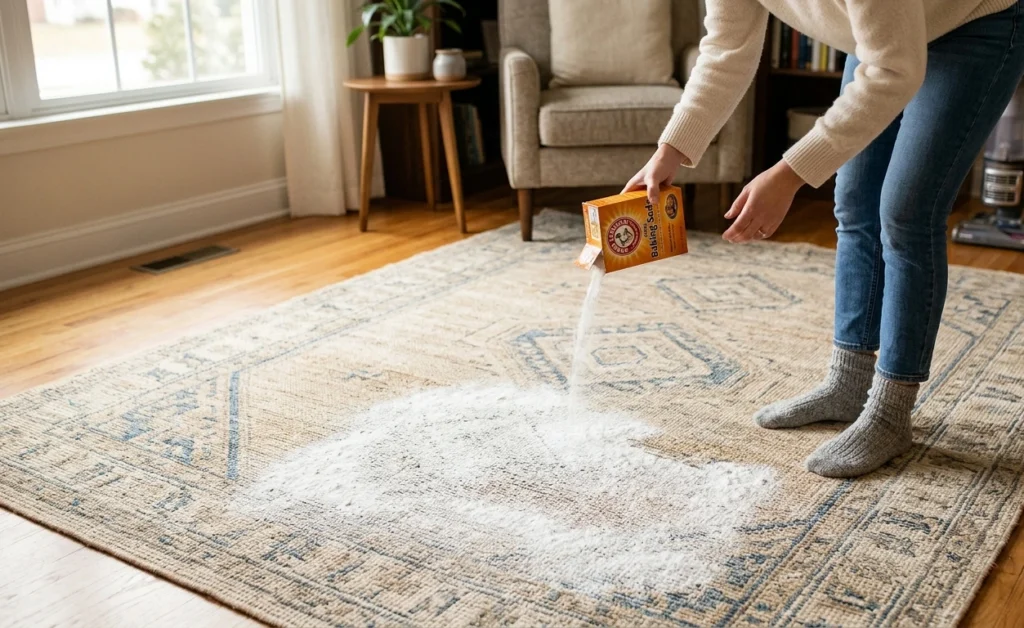
Baking soda can absorb odors, but it shouldn’t be considered a solution for active mold or mildew growth. If the smell is strong, keeps returning, or is accompanied by visible growth, the underlying issue needs further attention.
Step 5: Use Vinegar Carefully
Some homeowners choose vinegar for mildew smell rug because of its odor-neutralizing properties. However, vinegar isn’t suitable for every rug. Certain natural fibers, dyes, finishes, and delicate constructions may react poorly to acidic solutions or excess moisture.
If the rug’s care instructions allow it, test a small, hidden area first. Never saturate the rug, and avoid experimenting with household solutions on valuable or delicate rugs without knowing how the material will respond.
Step 6: Clean the Rug Based on Its Material
Different rug fibers require different cleaning approaches. A method that works for a durable synthetic rug may not suit wool, sisal, jute, silk, or an antique rug.
Check the manufacturer’s care instructions and choose a cleaning method compatible with the material. Avoid excessive water, particularly when working with moisture-sensitive fibers.
Step 7: Maintain Good Airflow Around the Rug
After cleaning, continue promoting airflow around the rug until it is completely dry. Don’t place it directly against a wall or put furniture on it while moisture remains.
Good ventilation is also useful as a long-term preventive measure. Keeping air moving around rugs, especially in rooms prone to humidity, can reduce the chance of moisture becoming trapped and causing another musty odor.
Schedule Professional Rug Cleaning For Mold And Mildew Removal
Knowing how to get mildew smell out of a rug starts with more than treating the odor itself. Identify the moisture source, dry the rug thoroughly, remove trapped debris, and use a cleaning approach that’s safe for its material. If the smell keeps returning, don’t keep masking it; there may be a deeper moisture or mildew issue that needs attention.
If your rug needs a deeper, material-appropriate clean, Clean To The Maxx can help restore freshness while treating the rug with care throughout the Hanford, CA. Whether you are dealing with lingering musty odors or need professional cleaning after moisture exposure, our team addresses odors and moisture-related concerns with the right cleaning approach, helping your rug feel fresh, clean, and ready to enjoy again.
Don’t let a musty rug take over your space. Contact us today for professional rug cleaning and odor removal!
FAQs
1. How to get rid of musty smell in a rug?
Start by finding and fixing the source of moisture, then dry the rug completely. Vacuuming and using baking soda may help with mild odors, but persistent smells may require professional cleaning.
2. How to tell if a rug has mold?
Look for unusual discoloration, fuzzy or powdery patches, and a persistent earthy or musty odor. If the rug has experienced prolonged moisture exposure, inspect both its surface and underside for signs of mold growth.
3. Is mildew smell in rug dangerous?
A persistent mildew odor shouldn’t be ignored because it can indicate ongoing moisture or microbial growth. If you suspect mold or the smell continues despite cleaning, consider having the rug professionally assessed.
4. Why does my rug smell musty after cleaning?
A rug may smell musty after cleaning if moisture remains trapped in the fibers, backing, or padding. Using too much water or cleaning solution and inadequate drying can also contribute to lingering odors.
5. How long does it take to get mildew smell out of a rug?
The timeline varies depending on the rug’s material, how deeply the odor has penetrated, how long it remained damp, and the cleaning method used. Mild odors may improve after thorough drying and cleaning, while persistent odors can take longer to address.